



“We are going into that big wide world, still unknown to us, apart from dry descriptions from books and brochures, and the bright splashes of colour from maps in the atlas. We are a numerous group. In the life of Polish post-war migration, it is only another temporary stage in the process of resettlement of Poles in various countries. In our case it is the attempt at settling in far off Australia. We are going with the faith that we will manage to build our lives”.
Written on the deck of the SS Strathnaver 1948
Between 1947 and 1949, a total of 1500 men made Australia their home. But these were no ordinary men. They were Polish soldier migrants, who had fought on all the European battlefields of the Second World War. They were men who’d been displaced, and then discouraged to return to their beloved homeland, due to the communist takeover of their country after the war. They were men who had seen betrayal of their motherland by the Great Powers, which had relinquished control of Poland to Stalin in exchange for a Cold War. They were men who were largely without family, but whose friendships between themselves had been forged in the fires of war and the ashes of post-war dislocation. They were soldiers whose government had been forced into Exile in London because of Nazi and Soviet tyranny.
They were young, energetic, optimistic, but they were lost. Australia offered them a home, but the offer was not without its conditions.
This is their story – the story of the Polish soldier migrants who were amongst the vanguard of ‘new Australians’ to settle on our [Australian] shores after the war.
Solution?
At the first meeting in London of the representatives of the British Dominions on 2 May 1946 the first item on the agenda was the “problem of the disposal of the Polish Armed Forces under British Command”. It was acknowledged that the Poles had “fought valiantly for us” that there was now “a moral obligation to look after their interests”. Ben Chifley, the Australian Prime Minister, stated that he “would be prepared to look at the matter” but “was not very hopeful”.
After the end of the war, Australian newspapers were filled with articles written in the United Kingdom reflecting a negative view of the Polish military stationed throughout the British Isles. London-based correspondents portrayed the Poles as “political malcontents and Fascists”, echoing propaganda from representatives of the Warsaw government (communist). In short, Poles were often portrayed in the press as being unsuitable migrants to Australia.
At the same time, the Australian Rats of Tobruk Association conducted a well-coordinated campaign on behalf of the Polish soldiers by lobbying the Australian government and politicians at both Federal and State levels. The Polish soldiers, the Rats argued, were their brothers-in-arms, with whom they had developed a close comradeship in North Africa and the Middle East. In May 1946, the New South Wales branch of the Rats of Tobruk communicated to the Minister of Immigration, Arthur Calwell, that at their April meeting “the branch decided that they would sponsor the admission of 100 Polish members to Australia” because they had fought alongside the Australians in Tobruk. In December 1946, the Queensland Branch of the Rats of Tobruk wrote directly to the Prime Minister of Australia, Ben Chifley, again advocating that the Polish soldiers be accepted as migrants to Australia. On 7 January 1947, the Victorian branch of the Rats of Tobruk also wrote to the Prime Minister of Australia. This was followed on 14 January 1947 where representatives from the Queensland Branch of the Rats of Tobruk Association made an approach to the Premier of Queensland.
After the war in Asia, Australia felt extremely vulnerable because it was so underpopulated. The government knew that Australia must “populate or perish”. The Australian Commonwealth Advisory Council at its inaugural meeting on 13 March 1947 addressed the possibility of Australia taking a certain number of Polish servicemen for permanent settlements. In the preceding months the Australian Federal government had asked state governments for numbers of Polish soldiers they were prepared to take, and by November 1946, a definitive plan for Polish immigration had been determined.
SS Asturias– September 1947 and December 1947
The first transport arrived in Fremantle, Australia, on 22 September 1947, comprising 278 men, predominantly members of the Polish Carpathian Division [of Polish 2 Corps]. The second transport of 168 men arrived on 9 December 1947, a mixture of army and air force personnel. Initially the men were accommodated in the army quarters in Karrakatta and then transported by trains to Adelaide, then on to Melbourne. When the first party of 80 Polish soldiers from the SS Asturias arrived at the Adelaide railway station on 30 September 1947, they were met by 20 members of the South Australian branch of the Rats of Tobruk Association.
At every stage of their journey, the arrival of the soldiers was widely publicised in newspapers throughout Australia. Contrary to the negative press of previous years the soldiers were now
constantly portrayed in a positive light. “280 young unmarried Polish war veterans – the best type of foreign migrant yet to come to Australia”, wrote one newspaper, –“this week received their Polish discharges in Adelaide and Perth”. Their connection with the Australians in the Middle East was constantly emphasised.
Tasmania: Hydro-Electric Commission
An advance party of the Polish soldiers arrived by air in Tasmania and was welcomed by a delegation of the Rats of Tobruk Association as well as representatives of the Commonwealth employment service. The remainder of the men from the SS Asturias voyages arrived in Tasmania on the Bass Strait steamer Taroona. They had been demobilised in Melbourne and were now ready to begin a new life as workers for one of Australia’s most important public works schemes.
SS Strathnaver – August 1948
The largest number of Polish military, 900 men, arrived in Australia in August 1948 aboard the P&O liner SS Strathnaver which had been used previously as a troop carrier. The departure of the men aboard the SS Strathnaver was speedy. After submitting their expressions of interest, they were interviewed and medically assessed. On 19 June 1948 they received two weeks’ notice that they would be going to Australia.
The final stage of their stay in the UK was coordinated by the Polish Resettlement Corps. The camp at Rougham near Bury St. Edmonds was the coordinating camp for the army units, while the airmen were collected at RAF Dunholme Lodge in Lincolnshire. The men were farewelled at the port of Tilbury (near London), where they were thanked for their service by representatives of the British and Polish military.
The ship sailed through the Mediterranean, the Suez Canal, and into the Indian Ocean. When it reached Fremantle, The Commonwealth Employment Service and Hydro-Electric commission staff boarded the ship and recruited men for various areas of employment.
The arrival of the SS Strathnaver was widely publicised in the Australian press, which announced that the largest number of Polish migrants (as well as over 400 Maltese migrants) had reached Australia shores. On 6 August 1948, while the SS Strathnaver docked at Princes Pier in Melbourne, the main Melbourne daily newspapers, the Argus and the Age, sent journalists and photographers to the ship to record the arrival of these “Polish military heroes” who were now making Australia their home.
Hobart
From Melbourne, the SS Strathnaver then continued on to Hobart where 350 men disembarked on 8 August 1948, bound for work on the Hydro-Electric Commission. On disembarkation, the men were taken to Brighton camp near Hobart where they were to remain for a couple of weeks during the demobilization process. The remainder of the SS Strathnaver men were directed to Sydney from where they were to continue to employment in New South Wales, Queensland, South Australia and Victoria.
Victoria
The largest group of men from the SS Strathnaver designated for employment in Victoria were sent to Gippsland to work in the timber industry. The remainder of men sent to Victoria were to labour in the brick, sawmill and public works industries.
Queensland
On 1 September 1948, 54 Polish servicemen from the SS Strathnaver arrived in Brisbane in transit to the northern cane fields of Queensland. The work was physically demanding in the hot, difficult conditions.
Manus Island
In 1949 a total of 75 Polish soldiers were sent to Manus Island buildings remaining from the naval and air force bases.
South Australia
South Australia provided positions on the railways and also in the gypsum and steel industries for a small number of Polish soldiers. Some were also sent to Woomera to work on the Woomera Range.
New South Wales
Of the 516 Poles who were sent to Bathurst, 300 had been in the Army, 198 had once been in the Polish air force and 2 had been in the Navy. The bulk of the soldiers who had arrived at the Bathurst reception camp in 1949 were employed by New South Wales Railways. They were sent to various camps in country areas which existed alongside upgrades in railway lines. Conditions within these camps were primitive and there were a number of complaints to the authorities and requests from the men to veterans groups for assistance in advocating on their behalf. A number of men undertook labour in public works – in particular the building of the Warragamba Dam which was one of the largest such constructions in New South Wales.
Asturias – August 1948 –Sydney
A few days after the arrival of the SS Strathnaver, the next contingent of Polish soldiers arrived in Sydney aboard the SS Asturias. The group of 51 soldiers were designated for labour in the Glen Davis shale mine in the Western coal mines of New South Wales, an endeavour which was to prove controversial. The Western Miners Federation was hostile to the arrival of newcomers and expressed opposition to any proposal to employ them. The miners’ National Convention decided that the 51 soldiers would not be able to work in the shale industry, with assertions made about them having been brought to Australia as potential strike-breakers. The issue escalated into a contentious problem with politicians intervening. The servicemen were eventually designated to “light duties” and were sent to do basic work in cleaning up the Glen Davis Township, working on bowling greens, the golf course, sport ovals and parks. Some were employed on the shale mine surfaces, working in peripheral areas of the mine itself.
Asturias – November 1948 –Western Australia
The final contingent of Polish soldiers came aboard the SS Asturias in November 1948. They were intended specifically for employment in Western Australia on public-works projects, the railways and in farming. The group of 93 men from both army and air force units were highly profiled in newspapers which focused on human interest stories of the individual men, their tragic pasts and their ambitions for the future.
Life at the Tasmanian Hydro-Electric Commission
During construction of the dams and sub-stations of the Hydro-Electric Commission, several regional townships and numerous temporary camps were established in the mountains of central Tasmania. These towns and camps serviced the men, women and families who came to build the Scheme. The Polish ex-servicemen were assigned to work on expanding the Hydro-Electric Scheme in camps such as Bronte Park, Tarraleah, Waddamana and Butlers Gorge. Life in the camps was tough, especially during the winter, when hundreds of men spent months with only basic amenities and provisions. The men from the Strathnaver were surprised to find heavy snow falls in Butlers Gorge within days of their arrival but despite the bitter cold, the snow was regarded “as a mere sprinkle” compared to what they’d known in Poland.
A sense of companionship and camaraderie grew out of hard work, isolation and a common memory of their war experiences. The men were conscious of their military past and their Polish identity. They established various activities and cultural pursuits which were the beginnings for future community structures. Community centres and facilities were established in towns around the “Hydro”. With a quarter of the HEC labourers being Polish, the region transformed with new and exotic foods. Many Australian families developed close relationships with the newly-arrived soldier migrants; some turned into marriages; others became lifelong friendships between the men especially. In general, Australians welcomed the new Polish workers with open arms.
Citizenship
With the arrival of new Australians, the Australian government introduced new legislation with the Nationality and Citizenship Act 1948, which came into force on 26 January 1949. The Polish ex-soldiers were a perfect example of how new arrivals were successfully integrating into Australian society. One of the conditions that the Australian government placed on this particular group of new migrants was that Polish servicemen were eligible to apply for citizenship after only one year in Australia, if they had served under British command for at least four of the previous eight years. The normal waiting period for Australian citizenship was five years. On 8 October 1949, in one of the Tasmanian Hydro-Electric Commission townships, Butlers Gorge, the Australian government organised the biggest mass naturalisation ceremony ever conducted thus far in Australia. In the presence of over 600 people, 194 Polish servicemen received Australian citizenship in the presence of High Commonwealth and State officials, including the Minister for Immigration, Arthur Calwell, as well is the Premier of Tasmania, Robert Cosgrove and the State President of the Returned Servicemen’s League. The ceremony was highly publicised in press and in newsreels which were shown throughout Australia.
Deportation
In promoting a positive image Polish migration to Australia, the Australian government was constantly conscious of a negative undercurrent within Australian public opinion to large non-British migration. And so, a number of stringent conditions of their settlement were imposed. The Polish servicemen brought to Australia were compelled to go to work which had been designated by the Commonwealth Employment Service. Until they were citizens, they were to carry booklets called Certificates of Registration in which they reported every change of address. The two-year period was generally called a two-year contract, even though most men did not recall signing any such documentation. There was a constant threat of deportation if they did not follow the instructions of public servants and report to their designated jobs.
Australian veterans groups
The Returned Services League (RSL) in Tasmania was very welcoming to the newly-arrived Polish soldiers. One of the Polish Rats of Tobruk was a delegate to the Tasmanian RSL Congress in November 1948. However not all Tasmanian RSL members were so welcoming. The RSL sub-branch at Butlers Gorge suggested that “all immigrants who do not learn the English language and the Australian way of living within two years should be deported to their country of origin.” This motion created a reaction amongst some of the Polish soldiers who promptly responded in a letter published in “The Mercury”. Not all State branches of the RSL accepted Poles as members. There were situations where a man had been accepted as a member of the RSL in Tasmania but was not be accepted as a member when he moved to Victoria or to another state.
The Polish veterans participated in Anzac commemorations in various cities depending on the acceptance and conditions set out by the local RSL branches. In Melbourne and Sydney the Polish airmen participated in the commemoration of the Battle of Britain on a regular basis.
Polish veterans groups in Australia
In the early 1950s, the Polish Airmen, the Rats of Tobruk and veterans of the 3rd Carpathian Lancers’ Division of Polish 2nd Corps established branches of their associations in Sydney, Melbourne and Tasmania.
The general association for war combatants (Stowarzyszenie Polskich Kombatantów – SPK), which was a continuation of the same structures already existing in the United Kingdom, established a number of branches throughout Australia – in Perth, Adelaide, Melbourne, Hobart, Launceston, Sydney and Brisbane. These veterans groups provided not only mutual welfare support but also a social outlet through the organisation of dances, get-togethers and cultural activities. These events frequently attracted people from the general Polish community and also friends and acquaintances within the broader Australian community and Australian veterans groups.
One of the key activities organised by these associations was the commemoration of historical milestones in their common wartime experiences. They took it upon themselves to organise
construction of the memorials of brothers in arms who did not survive the war and to organise events and functions on the anniversaries of specific battles.
Those who had been members of Poland’s Home (Underground) Army (AK) joined either the Melbourne or Sydney branches which rapidly grew with other veterans coming from the displaced person camps in Western Europe in the 1950s.
The Australian branches of the various associations maintained contact with their international counterparts and central headquarters in London. They all supported the Polish Government-In-Exile which continued its existence in London until the fall of communism in 1989.
Establishing a life
After completing the period of designated employment, the men settled down to establishing a “normal life”. Some remained in the same regions where they found employment. This was especially true for the men in Tasmania. Some stayed on as employees of the Tasmanian Hydro-Electric Commission, whilst moving to the two major cities on the island, Hobart and Launceston.
The majority of the men gravitated to the large cities on the mainland of Australia, while a small number remained in provincial towns scattered around the big continent. At all stages of building their new lives, the networks the men had established initially on board the ships and subsequently within their work environments, became their support mechanisms in the new country. The camps in which the Polish labourers made their first homes not only cemented their comradeship but also became the nest for future Polish community activities in Australia. For their own entertainment they established orchestras, choirs, libraries, tennis clubs and other such activities. The organizational skills they had developed in the military became very useful when establishing the beginnings of community life. In the large cities, some enterprising men purchased homes which became boarding houses and accommodation for single men.
In Sydney, pre-war Polish migrants such as the Kaczanowski and Kondratowicz families provided support to the single men who settled in New South Wales. Their homes became drop-in centres for those who did not have support structures in these crucial first years of their settlement period.
Families
An essential part of developing “a normal life ”was the establishment of families. Many men actively sought out Polish women as potential spouses. This was especially true amongst the men in Tasmania, who, like their Western Australian counterparts, married women who had arrived on the SS General Langfitt in 1950. These women had been survivors of Siberian deportations.
Some of the relationships were developed from correspondence between young Polish women in refugee camps in India and East Africa and the soldiers themselves. A number of the men married women who were amongst the Pahiatua orphans who had been taken in by the New Zealand government as refugees. While some of these women migrated to Australia, there were also examples where the men moved to New Zealand.
A large number of the men married local Australian girls or women who were from amongst the European displaced people coming to Australia in the 1950s. Some men had established
relationships with women in England who in turn migrated to Australia themselves. Some of the men remain bachelors for a number of years and only married after returning to Poland for vacations once the political thaw started in Eastern Europe. A certain number remain bachelors all their lives.
Polish communities
Part of the normalisation process involved the building of community organisations and structures. The men, who had given years of service to Poland, now believed that they had the patriotic obligation to maintain culture, language and memory in the spirit of freedom. The organisational skills acquired in the military became second nature for the men during the community-development process in Australia. Frequently these ex-military men became leaders of the Polish community in the forthcoming decades. Under trying circumstances, they forged ahead with vision and ideological foundations to build Diaspora institutions, so as to maintain and develop a sense of the national identity in a foreign land. The interpersonal relationships built on mutual wartime and postwar experiences contributed to the feeling that the men belonged to an extended family.
Far away from blood relations and networks, the men established surrogate relationships. They and their wives became godparents to each other’s children and frequently became surrogate uncles and aunties. In small cities such as Hobart they settled in the same neighbourhoods. With the arrival of the next generation, activities were established to maintain culture and language through language schools, and scouting and dance groups.
author : Lucyna Artymiuk, Melbourne, Australia
Text is an extract from bigger publication “Destination Australia. Polish Soldier Migrants (1947-1948)” Polish Museum and Archives in Australia Inc., Melbourne 2019

Source: “Dziennik Polski i Dziennik Żołnierza” (London). 25.07.1947.


(from Blazejowski family collection).
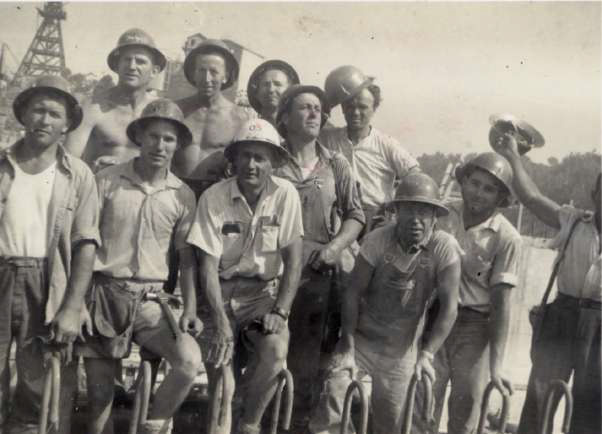


(Paszkiewicz family collection)

(Wladyslaw Krzysica collection)

(National Library of Australia)

(Smolnicki family collection)

(Smolnicki family collection)


(Jan Markut collection).

(Połacik family collection).


(Połacik family collection).